Landing at Boston Logan From Abroad? A Traveler’s Guide to Booking Luxury Ground Transport
Twelve hours in the air, a slow customs line, and two checked bags on a carousel. That moment when you step past the automatic doors at Boston Logan International Airport feels like the hardest part of an overseas trip. Your phone is hunting for a U.S. signal and your cash is in the wrong currency. You still need to get from East Boston to wherever you’re staying.
Most online guides about Logan ground transportation lump all arriving passengers together. Travelers landing after a transatlantic flight face a different set of problems. Customs processing times vary by the hour. Tipping norms confuse visitors from countries where gratuity isn’t expected. The airport sits on a narrow peninsula surrounded by harbor tunnels, and that geography adds a complication most domestic travelers never consider.
Getting Through Terminal E After a Transatlantic Arrival
Terminal E handles every international arrival at Boston Logan. After deplaning, passengers move to Level 2 for U.S. Customs and Border Protection screening. Wait times shift based on how many flights clear at once. Early-morning arrivals from London Heathrow, Dublin, Frankfurt, or Reykjavik often see shorter lines. Evening waves from Europe and the Middle East stack three or four planes at once, and waits during those windows regularly push past 45 minutes.
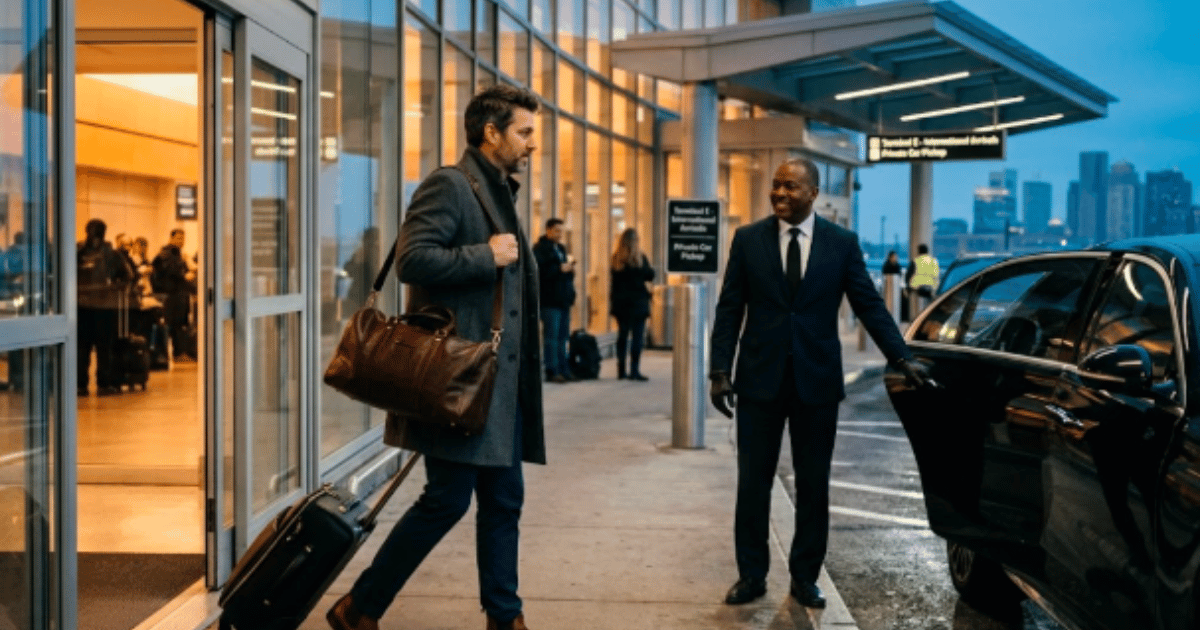
Down on Level 1, baggage claim occupies a single hall shared by all international flights. From there, overhead signs point toward the ground transportation curb at the lower-level exit. The walk takes eight to fifteen minutes based on your gate and how fast bags appear. Blue Nile Livery and other pre-booked operators station chauffeurs inside the arrivals hall with name placards. That small step saves you from wandering outside looking for a numbered pickup zone along the curb.
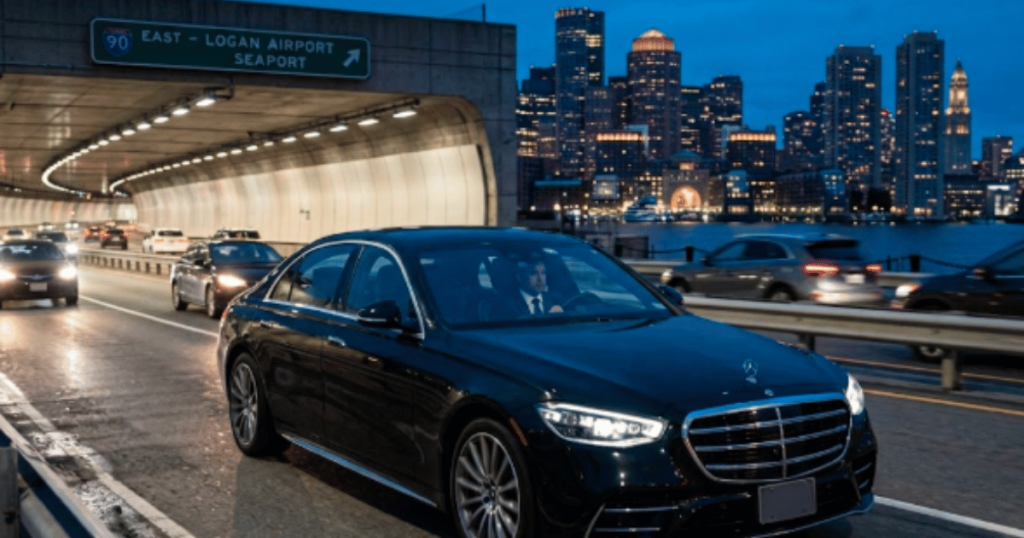
Tunnel Routes Between Logan and Downtown Boston
Logan sits on a peninsula in East Boston, separated from downtown by Boston Harbor. Three tunnel crossings and one surface highway connect the airport to the city, and each one handles different traffic at different hours.
Under the harbor, the Ted Williams Tunnel carries Interstate 90 and Massachusetts Turnpike traffic toward the Seaport District and neighborhoods south and west. Vehicles from East Boston heading into downtown and the North End use the Sumner Tunnel. Outbound city traffic takes the Callahan Tunnel. Route 1A offers a surface approach from communities like Revere and Lynn on the North Shore.
During weekday rush hours, all three tunnels back up badly. A ride that takes seven minutes at midnight can balloon to thirty-five minutes between 5 p.m. and 7 p.m. Chauffeurs who handle Boston airport transfers daily learn which crossing clears fastest at each hour. Blue Nile Livery drivers on the Logan route might cut through the Ted Williams during afternoon congestion and switch to the Sumner for a late-night ride to Cambridge or the Back Bay.
Book the Car Before You Board
Hailing a rideshare from the curb works for most domestic arrivals. International passengers face a different calculation. Your phone might need several minutes to reconnect after landing. Surge pricing on Uber and Lyft spikes when multiple transatlantic flights touch down in the same window. If your plane lands late, no on-demand car is waiting at Terminal E for you.
Pre-booked car services work on a separate system. Licensed operators track flights through platforms like FlightAware. Delays show up on the driver’s screen in real time, and the pickup window shifts to match. Flat-rate pricing locks in the fare before you leave home. Meters and surge multipliers never enter the picture. Blue Nile Livery pairs this model with a meet-and-greet service. A chauffeur walks into the terminal with a name sign and takes your bags to an executive sedan or luxury SUV at the commercial curb.
Licensed Operators and the Massport Rules Behind Your Ride
Not every black car outside Terminal E operates with proper credentials. Massport, the Massachusetts Port Authority, requires all commercial ground transportation companies at Logan to hold an active operating agreement under 740 CMR 23. That regulation covers vehicle inspections and minimum insurance thresholds. It also mandates driver background checks and controls access to the commercial pickup lanes at each terminal.
Massachusetts layers a state requirement on top. Livery companies must carry a license from the Department of Public Utilities. Drivers need the CDL or chauffeur endorsement that matches their vehicle class. Whether you are traveling locally or booking a reliabale and affordable airport car service, the Federal Motor Carrier Safety Administration oversees operators on interstate corridors between cities like Boston and New York or Boston and Providence.
With both the Massport operating agreement and the state livery license in hand, Blue Nile Livery also holds membership in the National Limousine Association. Those credentials determine which vehicles can pull into Terminal E’s commercial curb lane legally. Unlicensed cars get turned away by Massport enforcement staff, and that distinction matters when you’ve spent a full day in transit and a no-show driver means joining a taxi queue at midnight.
Timing the Ride for Red-Eye and Peak-Season Flights
Flight schedules at Terminal E cluster in predictable patterns. Morning transatlantic flights from Western Europe typically land between 6 a.m. and 9 a.m. Connections from the Middle East and Asia arrive during the late afternoon and evening hours. Red-eye flights from other U.S. hubs filter in after midnight.
Each window carries its own ground transportation challenge. Morning arrivals hit the tail end of Boston’s commuter rush through the tunnels. Evening arrivals land during peak tunnel congestion. Red-eye passengers face fewer taxis and longer waits for on-demand rides, while the MBTA Blue Line runs limited service after midnight. During Thanksgiving week and Boston Marathon weekend, every window gets significantly busier. Blue Nile Livery and similar operators suggest booking at least 24 hours ahead during holiday travel periods and several days out for major events.
If your travels extend to other international cities, the ground transportation question follows you. Cities like Dubai run on entirely different systems of metros and ride apps. Knowing how to get around a city without a personal car before you land saves real time at every airport.