
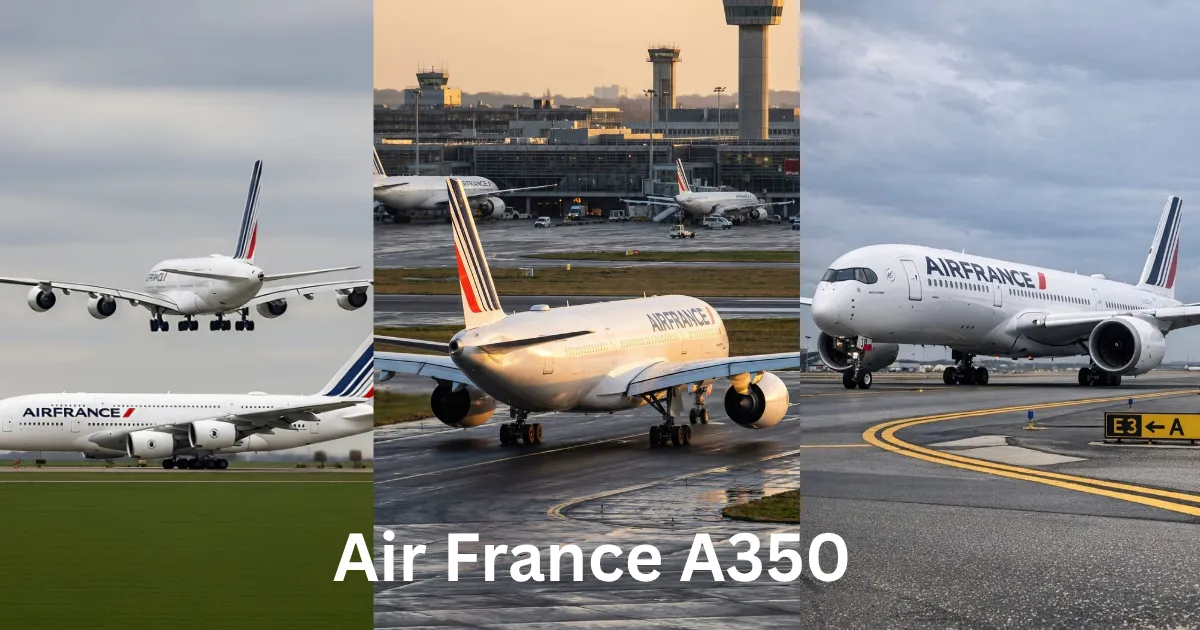
Air France A350 Chicago Flight Return in 2025 Shocks Flight Trackers
Once they are well over the Atlantic, long-haul flights hardly ever turn around. For this reason, online passenger forums and aviation communities were immediately interested in the recent Air France A350 Chicago flight return.
The routine flight of Air France Flight AF136 from Paris to Chicago suddenly became an unscheduled transatlantic turnaround. The Airbus A350 reversed course mid-flight, returning to Paris rather than continuing toward Chicago, as passengers using live aircraft charts could see.
The unusual movement immediately sparked questions about operational safety, airport authorization, and whether the aircraft had been refused entry into Chicago airspace.
A flight to Chicago O’Hare International returned to Paris-Charles de Gaulle Airport after spending almost 7 hours in the air, drawing major attention from aviation watchers and passengers tracking the route online.
Nobody Expected the Mid-Atlantic Turnaround
The aircraft involved in the incident was an Airbus A350 on the scheduled Paris-to-Chicago route. Particularly on contemporary long-haul aircraft built for incredibly efficient international travel, flights on this route usually continue uninterrupted. However, reports surrounding the Air France ORD flight return suggest the crew may have encountered issues reportedly connected to operational clearance while en route across the Atlantic Ocean.
Instead of continuing toward Illinois with unresolved concerns, the aircraft reportedly reversed course and returned to France safely.
Passengers may find that choice dramatic, but caution is always the top priority in commercial flight. If arrival approvals or routing requirements become unclear, airlines will stop operating internationally.
Why Did AF136 Reverse Course? Suddenly!
The reported Air France AF136 Chicago clearance issues (as suggested in online reports) related to the flight garnered a lot of online attention.
Clearance in aviation relates to formal permission for airspace access, approach sequencing, routing, and airport arrival protocols. Long-haul international flights rely significantly on cooperation between several air traffic control locations.
If any issue develops involving:
- Permissions for routing
- Documentation related to operations
- Coordination of airspace
- Authorization for arrival at the airport
- Limitations on traffic management
The flight crew and airline operations center may decide that returning is safer and operationally smarter than continuing the flight. That is believed to be the central issue behind the Air France flight denied clearance discussions spreading online after the aircraft turned around over the Atlantic.
The Chicago Question Everyone Started Asking
Once flight trackers showed the aircraft heading back east, aviation followers immediately started asking whether the Air France flight denied landing chicago reports were accurate.
The situation seems more related to unresolved operational authorization than to a last-minute airport rejection, even though social media swiftly turned it into a dramatic “denied landing” story.
Crucially, it was reported that the plane made a U-turn prior to arriving at Chicago O’Hare International Airport. This distinction is important because if crucial coordination or procedural approvals are not completed, flights may return long before landing.
Still, searches for phrases like ” Paris flight denied landing in Chicago” surged online as travelers tried to understand what happened to AF136.
Inside the Operational Side of an International Return
Returning a long-haul aircraft is not a small decision.
A transatlantic return affects nearly every part of airline operations, including:
- Fuel calculations
- Crew duty limits
- Aircraft scheduling
- Passenger rebooking
- Airport gate planning
- International coordination
That is why airlines usually attempt every possible solution before deciding to reverse course.
Reports connected to the incident suggested the airline prioritized procedural compliance rather than risking operational complications later during arrival in the United States.
Additional flight-tracking details regarding the situation were discussed in this report from Air France AF136 Flight Report
Passengers Likely Knew Something Was Wrong Mid-Flight
Once the airplane shifted course over the ocean, the situation probably grew unclear for the passengers. On long-distance journeys, most travelers anticipate occasional delays or turbulence. However, passengers using flight-tracking applications or entertainment maps are instantly alarmed by a full route reversal.
Online observers of AF136 flight status updates quickly became aware of the strange movements.
Cabin crews are trained to remain composed in such situations, while airline dispatch personnel organize modified plans from the ground. Even when there isn’t an onboard emergency, operational returns require careful passenger communication.
Why Airlines Sometimes Return Instead of Diverting
Many passengers questioned why the Air France A350 Chicago flight return than took a different route in North America.
The response often depends on a number of operational parameters, such as:
- Fuel condition
- Planning for maintenance
- Scheduling the crew
- Requirements for passenger processing
- Availability of airport assistance
- Logistics of airline hubs
Returning to its main operations base might occasionally result in the quickest overall recovery procedure for a large international carrier like Air France.
The Air France AF136 Chicago flight return also highlights how airlines often choose the most operationally controlled environment when unusual situations develop during intercontinental routes.
The Airbus A350’s Role in Managing Long-Haul Flights
The aircraft involved was an Airbus A350, one of the most advanced passenger aircraft currently flying internationally.
The A350 is widely known for:
- Long-range efficiency
- Advanced flight monitoring systems
- Improved fuel management
- Cutting-edge cockpit technology
- Improved communication capabilities
These systems help crews detect operational complications early and coordinate with airline dispatchers in real time. That level of technology likely helped flight crews manage the situation professionally during the reported Air France AF136 Chicago clearance issues event.
Flight Tracking Culture Changed Aviation News Forever
Years ago, unusual airline events took hours before reaching the public. Today, live aircraft tracking has completely changed that.
The moment AF136 turned around, online aviation communities began sharing screenshots, theories, and route maps across social media platforms.
As a result, phrases like “Air France flight denied clearance” and “Air France flight denied landing chicago quickly began trending among aviation watchers.
Real-time public tracking now means even routine operational disruptions can become global aviation stories within minutes.
What Happens Next After a Flight Return?
After a long-haul return like this, airlines usually begin a large recovery process behind the scenes.
That process may include:
- Inspecting the aircraft
- Reassigning crews
- Rebooking passenger arrangements
- Organizing the replacement of flights
- Keeping operational documentation current
Passengers affected by the Air France ORD flight return were likely offered alternate travel arrangements depending on aircraft availability and scheduling.
For international carriers, minimizing passenger disruption becomes the next major priority once the aircraft safely lands.
Flight Summary Table
| Category | Details |
| Flight | Air France AF136 |
| Aircraft | Airbus A350 |
| Route | Paris → Chicago |
| Event | Mid-Atlantic return |
| Reported cause | Air France Af136 Chicago Clearance issues |
| Outcome | Returned safely to Paris |
| Public reaction | High tracking interest |
A 30,000-Foot Plot Twist
One of those aviation stories that travelers could not stop following online was the unexpected Air France A350 Chicago flight return. After reports connected the incident to operational clearance issues with Chicago arrival procedures, what had begun as a routine trip across the Atlantic became a major talking point.
Even as internet rumors about the Air France flight that was denied landing in Chicago persisted, the episode ultimately showed how seriously airlines take safety, coordination, and international flying authorization. Modern aircrews typically prioritize safety over convenience, particularly on long-haul international flights.
For more aviation updates, breaking travel news, flight incidents, airline trends, and smart flying insights, stay connected with Travel Hub Dubai, where global travel stories never stay grounded for long.
FAQs
- What caused the Air France A350 Chicago flight return to Chicago?
It is related to reported operational clearance issues during the flight.
- Was there an emergency on board?
No emergency was reported. The situation seems procedural.
- Did the flight actually land in Chicago?
No, the flight turned back before entering U.S. airspace.
- Why is everyone talking about the Air France flight being denied clearance?
Because flight tracking showed a sudden return, sparking online speculation.
- What does the AF136 flight status show?
It shows the flight is returning to Paris after the mid-Atlantic turnaround.
- Is a mid-air return common?
It is rare, but it can happen when operational or clearance issues occur.

Daniel Brooks specializes in practical travel advice for anyone visiting the United Arab Emirates. His expertise includes transportation, airports, visas, budgeting, road trips, travel safety, and itinerary planning. From navigating Dubai’s metro system to planning scenic escapes in the Northern Emirates, Daniel creates easy-to-follow guides that help travelers explore the UAE with confidence.